Aspendos and Perge from Side: two ancient cities in one day
Updated October 8, 2026 · 6 min read
Aspendos and Perge reward different kinds of attention. Aspendos has the immediate spectacle: a remarkably complete Roman theatre. Perge is a larger archaeological landscape where you walk among gates, baths, an agora, fountains and a long colonnaded street. The Perge, Aspendos and Kurşunlu Waterfall trip from Side combines both sites with transport and a guide, so you do not have to turn a history day into a driving and parking exercise.
What the day is really like
This is not two quick photo stops. Perge needs time on foot, much of it over exposed, uneven ground. Aspendos is more compact, but the best view involves climbing the theatre seating, and the ruins above the theatre take extra time. Kurşunlu Waterfall changes the rhythm with shade and water, although paths and steps still make it a stop rather than a rest day.
The official museum pages currently list both archaeological sites as open daily. They also warn that Perge’s ancient theatre is temporarily closed during restoration. That does not close Perge itself: the city gate, streets, baths and other remains are the main reason to visit. Opening hours and access can change, so check the official listing or the booking page shortly before departure.
Why the pairing works
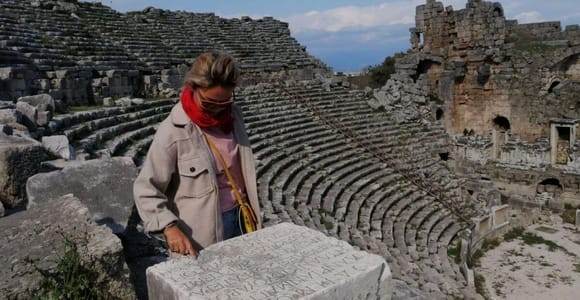
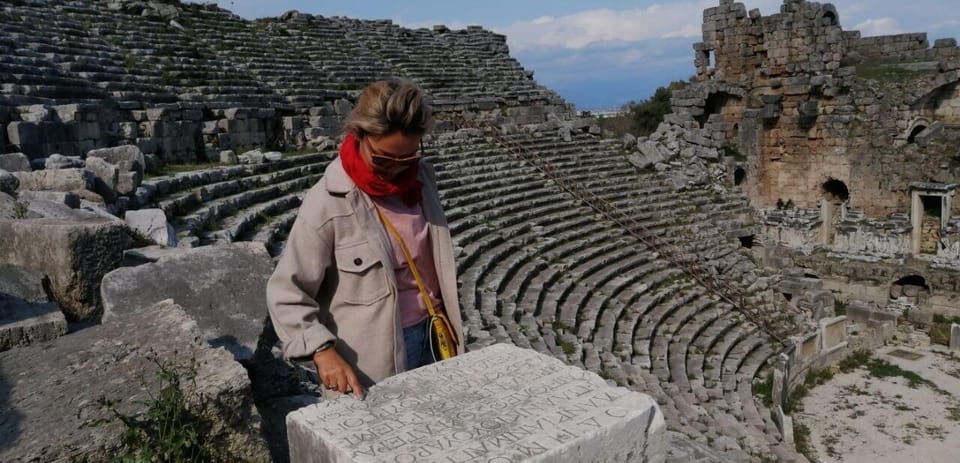
At Aspendos, concentrate first on the theatre. The Ministry of Culture describes it as holding about 15,000 people; behind it, the aqueduct and the upper-city remains show that Aspendos was more than a performance venue. At Perge, the scale unfolds gradually. Its Hellenistic towers mark the formal entrance, while the Roman baths, agora and water channel explain how a prosperous city functioned.
Seeing both prevents a common mistake: treating every ancient site as another collection of columns. Aspendos is about one exceptional building and its setting. Perge is about urban planning, water and movement through a city.
Guided trip or independent visit?
A guided day is the sensible choice if you want both sites without navigating, parking and reading every panel yourself. It is also easier in hot weather because the transfer creates breaks between exposed walks. The compromise is pace: a group timetable decides how long you spend at each ruin, and hotel pickups add time.
Go independently if you care deeply about archaeology, want the upper ruins at Aspendos, or prefer to photograph Perge without keeping up with a group. In that case, verify current access and ticket details with the official sites rather than relying on an old blog post.
What to bring and when to skip it
Wear shoes with grip, carry water and use sun protection; Perge has little continuous shade. A hat matters more here than another camera lens. Anyone who struggles with uneven surfaces should ask the operator exactly how much walking is planned and whether the vehicle can shorten any section. Do not assume that an archaeological site is accessible simply because a coach reaches its entrance.
Skip this combination if your main wish is a slow museum visit or a long waterfall break. It is designed for breadth. For travellers who want the strongest ancient contrast available in one organised day from Side, however, Aspendos plus Perge is the better pairing than adding a third major ruin and rushing through all of them.